
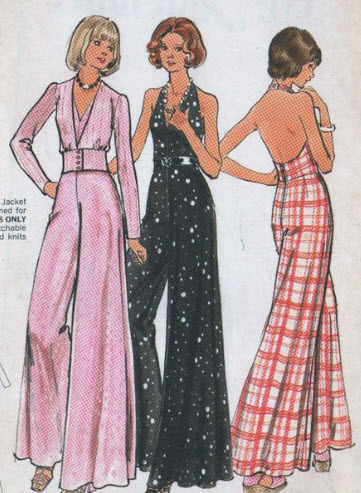
Creating a sewing pattern for a disco jumpsuit from the 1970s involves a combination of pattern drafting and adapting existing patterns. Here’s a simplified guide to help you get started:
Materials:
- Fabric (stretch fabric like polyester or jersey works well)
- Pattern paper or large sheets of paper
- Measuring tape
- Pencil, eraser, and ruler
- Scissors
- Sewing machine and notions (zipper, thread, etc.)
Instructions:
- Measurements:
- Take accurate measurements of your bust, waist, hips, inseam, and torso length.
- Reference Images:
- Collect images or drawings of disco jumpsuits from the 1970s for reference.
- Create a Basic Bodice Pattern:
- Start with a basic bodice pattern. You can use an existing pattern or create one by following tutorials on basic bodice drafting.
- Adjust for Style:
- Modify the basic bodice to have a V-neckline or a plunging neckline typical of disco jumpsuits.
- Add a Waistband:
- Integrate a waistband to create the separation between the top and bottom parts of the jumpsuit.
- Design the Bottom:
- For wide-legged pants, extend the pattern downward from the waist, making sure to accommodate the desired width of the legs.
- Add Flared Sleeves (Optional):
- If you want the jumpsuit to have flared sleeves, modify the basic sleeve pattern to achieve the desired look.
- Cutting and Marking:
- Transfer the adjusted pattern onto your fabric, making sure to mark darts, notches, and other important points.
- Sewing:
- Sew the bodice pieces together, adding the waistband. Then, sew the pants, leaving openings for the inseam.
- Assembly:
- Attach the bodice and pants at the waist, ensuring a smooth transition. Add a zipper or other closures as needed.
- Finishing Touches:
- Hem the bottom of the pants and sleeves. Make any final adjustments for fit.
- Embellishments (Optional):
- Consider adding disco-appropriate embellishments such as sequins, metallic trims, or other decorative elements.
Remember, sewing patterns are highly customizable, so feel free to adapt and experiment based on your preferences and the specific style you want to achieve. If you’re new to pattern drafting, there are many online resources and tutorials that can guide you through the process.