
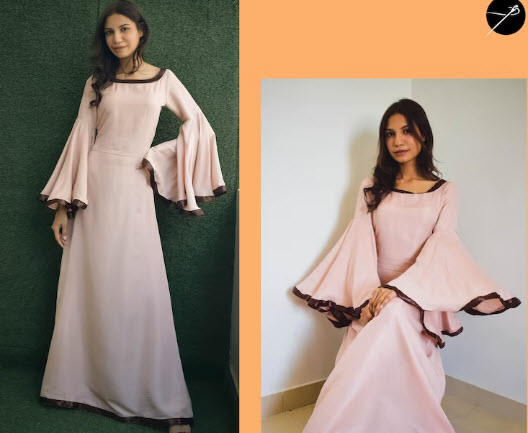
Creating a medieval dress sewing pattern can be a bit complex due to the historical and intricate nature of the style. Medieval dresses vary depending on the time period and region, but they generally involve long flowing skirts, fitted bodices, and often have details like long sleeves and decorative trims. Here’s a simplified pattern that you can use as a starting point for a basic medieval-style dress:
Materials Needed:
- Heavyweight fabric such as linen, wool, or cotton (in desired color)
- Matching thread
- Sewing machine or needle
- Scissors
- Pins
- Measuring tape
Pattern:
- Bodice Front and Back:
- Measure your bust, waist, and hips. Add a few inches for ease and comfort.
- Divide these measurements by 2 and add seam allowances (typically ½ inch) to each side.
- Using these measurements, draw two rectangles for the bodice front and back. The width should be your bust or waist measurement (whichever is larger), and the height will be the desired height of the bodice (from the top of your shoulders to your waist).
- Sleeves:
- Measure the length from your shoulder to your wrist for the sleeve length.
- Measure the circumference of your upper arm and add a few inches for ease.
- Divide this measurement by 2 and add seam allowances (typically ½ inch).
- Using these measurements, draw a tapered rectangle for the sleeve. The wider end should match the upper arm measurement, and the narrower end should match the wrist measurement.
- Skirt Panels:
- Measure the length from your waist to the desired length of the dress.
- Measure the desired width of the skirt at the waist level and multiply it by 2 or 3 for a full skirt.
- Using these measurements, draw a trapezoid for the skirt panels. The wider end should match the waist measurement, and the narrower end should match the hem measurement.
Assembly:
- Bodice:
- Cut out two rectangles for the bodice front and back.
- Sew the side seams of the front and back pieces together, leaving openings for armholes and a larger opening for the neckline.
- Sleeves:
- Cut out two sleeve pieces.
- Sew the longer edges of the sleeves together to form tubes.
- Attach the sleeves to the armholes of the bodice. Make sure the wider end of the sleeve is attached to the bodice and the narrower end to the wrist.
- Skirt:
- Cut out multiple trapezoidal panels for the skirt.
- Sew the panels together along the shorter edges to create a long skirt piece.
- Gather the top edge of the skirt and attach it to the bottom edge of the bodice.
- Finishing:
- Hem the sleeves and the bottom of the skirt.
- Add any desired embellishments like decorative trims, embroidery, or lace.
Remember that medieval dresses can vary widely in style, so feel free to adjust the pattern and design details according to your desired look. Additionally, you may need to adapt the pattern to your measurements for the best fit.