
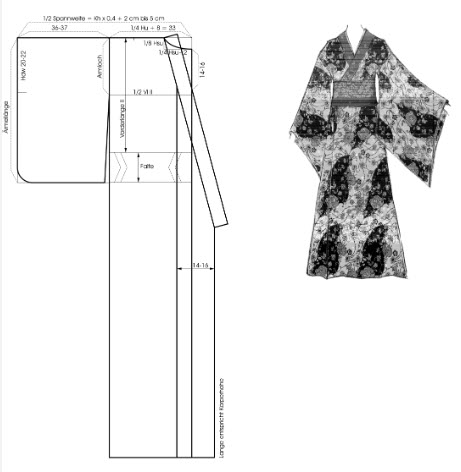
Creating a kimono typically involves a relatively simple sewing pattern compared to more complex garments. Here is a basic guide to drafting a kimono sewing pattern. Please note that the measurements and steps provided are general guidelines, and you may need to adjust them based on your specific measurements and preferences.
Materials:
- Lightweight fabric (silk, cotton, or a fabric of your choice)
- Measuring tape
- Scissors
- Pins
- Sewing machine or needle and thread
Instructions:
1. Take Measurements:
- Measure your bust circumference.
- Measure from your shoulder to where you want the kimono to end (hip or ankle length).
- Decide on the sleeve length and measure from your shoulder to your wrist.
2. Drafting the Pattern:
- Body Piece:
- Fold your fabric in half.
- Draw a rectangle on the fabric using the bust circumference measurement as the width and the length from shoulder to the desired length as the height.
- Cut along the lines, through both layers of fabric, creating two identical rectangles.
- Sleeves:
- Measure and mark the desired sleeve length from the top edge of the body piece.
- Extend lines from the top corners of the rectangle to create the sleeves. The sleeves can be straight or slightly flared, depending on your preference.
- Cut along the lines.
3. Assembling and Sewing:
- With right sides together, sew the side seams of the body pieces to create the kimono shape.
- Hem the bottom edge and the sleeve edges. You can fold the fabric twice to create a neat hem.
- Fold the kimono in half with right sides together and sew along the sleeve seams and the side seams.
- Finish the neckline by folding the fabric inside and stitching or adding bias tape for a clean finish.
4. Optional Belt:
- You can create a separate belt by cutting a long strip of fabric, folding it in half lengthwise, sewing along the edge, and turning it right side out.
5. Finishing Touches:
- Press the seams for a polished look.
- Try on the kimono and make any necessary adjustments.
Feel free to modify the measurements and design to suit your preferences. This basic pattern is a great starting point, and you can experiment with different fabrics, lengths, and sleeve styles to create a kimono that suits your style.