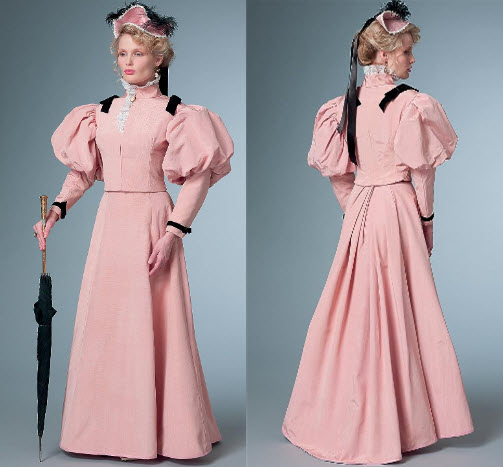
Creating a Victorian dress sewing pattern from scratch is a complex and detailed process that requires advanced pattern-making skills. To make a Victorian dress pattern, you'll need to decide on the specific style and era within the Victorian period, gather accurate historical references, and follow these general steps:
Materials You'll Need:
- Large sheets of paper or pattern paper
- Pencils, pens, or markers
- Measuring tape
- Rulers and curves (for drafting)
- Pattern drafting paper or tracing paper
- Scissors
- Tape
- Pattern weights or pins
Steps to Create a Victorian Dress Sewing Pattern:
- Research and Reference Gathering:
- Choose a specific Victorian era (e.g., early Victorian, mid-Victorian, late Victorian) and style (e.g., day dress, evening gown).
- Collect reference images and historical fashion plates to understand the silhouette, design details, and construction techniques of the chosen style.
- Measurements:
- Take accurate measurements of the person who will wear the dress. These measurements will form the basis for your pattern.
- Draft the Bodice Pattern:
- Begin with the bodice pattern. Draw a horizontal and vertical centerline on your pattern paper.
- Draft the front and back bodice patterns separately, adding darts, seams, and neckline shapes as per your chosen style and measurements.
- Ensure that you include seam allowances.
- Draft the Skirt Pattern:
- Draft the skirt pattern separately, taking into account the desired fullness, length, and shape.
- Decide on the number and placement of skirt panels or gores, which can vary depending on the era.
- Add seam allowances to your skirt pattern.
- Sleeve, Collar, and Cuff Patterns:
- Draft separate patterns for the sleeves, collar, and cuffs if your chosen style includes these elements.
- Combine and Adjust:
- Combine the bodice and skirt patterns, ensuring that they match at the waistline.
- Make adjustments based on your measurements, such as taking in or letting out seams and darts.
- Create a Mock-Up (Muslin):
- Make a muslin (mock-up) of your pattern to test the fit and design. This step is crucial for adjustments.
- Finalize the Pattern:
- Make any necessary adjustments to the pattern based on the fit and design of the mock-up.
- Marking and Notations:
- Add notations, grainline, pattern pieces labels, and any other necessary markings to your pattern.
- Test Sewing:
- Use your pattern to sew a test garment in your chosen fabric, making further adjustments as needed.
- Complete the Pattern:
- Once you are satisfied with the fit and design of your test garment, finalize your pattern by transferring all adjustments and notations to the original pattern pieces.
- Instructions and Illustrations:
- Create sewing instructions and illustrations to guide you through the sewing process.
- Store the Pattern:
- Keep your completed pattern pieces in a safe and organized manner for future use.
Please note that creating a Victorian dress pattern from scratch can be a time-consuming and challenging process, and it requires a strong understanding of pattern drafting and historical fashion. It's advisable to have experience in pattern-making or seek guidance from an experienced pattern maker or seamstress if you are not familiar with the process. Additionally, historical accuracy is essential when creating Victorian-era garments, so thorough research is crucial.